Settlement and trial
Most police abuse cases end in a settlement, and most settlements come after discovery, often after the qualified immunity motion is decided. In New York City the Comptroller can settle a claim before a lawsuit is filed, and the Law Department defends and settles the lawsuit itself. A case that does not settle goes to a jury, which decides what happened and what it is worth. This page explains who settles, what a jury decides, the kinds of damages, attorney's fees, interest, and the Florida caps. It does not say what any case is worth, and the firm publishes no results.
A settlement is an agreement to end the case for a sum, with no admission. A trial is a jury deciding. Both come at the end of the same road: the notice of claim, the criminal case, the complaint, discovery, the motion. What this page adds is who sits on the other side of the table, what the jury is actually asked, and what happens to a verdict afterward. If a criminal charge is pending, talk to your defense lawyer before describing the arrest to anyone; a settlement or a verdict is years away and the criminal case is now, as the criminal case and civil case page explains.

Settlement with the City, in plain words
New York City has two offices on the other side of a police abuse case. The Comptroller receives the notice of claim (N.Y. Gen. Mun. Law § 50-e(3)), may demand the 50-h examination (§ 50-h), and can settle a claim before any lawsuit is filed. Some claims resolve that way, on the strength of the notice, the footage and the examination. Once a lawsuit is filed, the Law Department, the City's law office, defends it, and any settlement of the lawsuit is negotiated with the Law Department's lawyers and approved through the City's process. The distinction matters for reading public figures: the Legal Aid Society's payout figures on the by the numbers page count lawsuits resolved by the Law Department and exclude pre-litigation Comptroller settlements, so they are a count of lawsuits, not of every claim the City paid.
When a case settles is a matter of leverage. Early, the City knows less and offers less. After discovery, when the footage is in the record and the officers have testified, the case has a shape both sides can see. After the court denies qualified immunity, the officers face a jury, and that is when most cases that settle do. A settlement is confidential or public depending on its terms, and it is yours to accept or refuse; we advise, you decide, and nothing is settled without your signature.
What a settlement is not
It is not discipline, not an admission, and not a finding. The officer's department decides discipline, informed in New York City by the CCRB; the prosecutor decides criminal charges; a civil settlement decides neither. A person who wants a finding on the record needs a verdict, and a verdict is the trial's risk in both directions.
What a jury decides
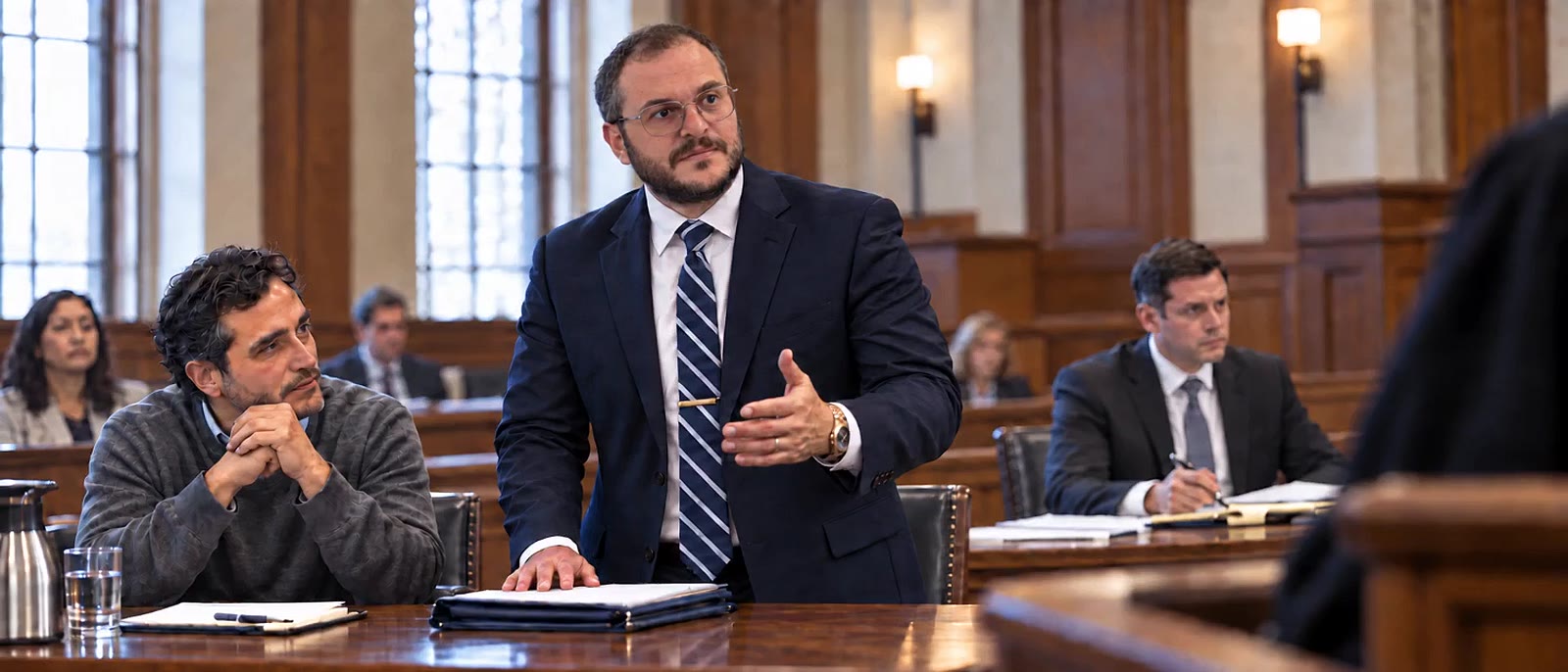
A trial is days or weeks of testimony in front of a jury, in federal court in Brooklyn or Manhattan or in state court, with the footage played and the officers and the plaintiff examined and cross-examined. The judge instructs the jury on the law: what probable cause means, that force is judged by objective reasonableness on the totality of the circumstances (Graham v. Connor, 490 U.S. 386 (1989); Barnes v. Felix, 605 U.S. ___ (2025)), what a fair-trial claim requires. The jury decides the facts: what the officers knew, what they did, what it caused. On the federal claims the judge decides qualified immunity as a matter of law, but where it depends on disputed facts the jury resolves those facts first. On the state-law claims and, for an NYPD case, the claim under the City's 2021 law (N.Y.C. Admin. Code § 8-803), there is no qualified immunity, and the jury decides liability outright (§ 8-804).
Then the jury decides damages, in three kinds.
Compensatory damages
The loss the violation caused: physical injury and pain, medical costs, lost wages, the loss of liberty itself, emotional harm. This is the number most of a trial is about, and it depends on the injury, its documentation, and the length of the detention, which is why the medical records and the dated photographs from the first week are shown to the jury.
Nominal damages
Where the jury finds that a right was violated but no compensable loss was proved, it awards nominal damages, a token sum. That is a real outcome and a real judgment: the Supreme Court held that nominal damages redress a completed violation and keep a case alive (Uzuegbunam v. Preczewski, 592 U.S. 279 (2021)). In Garnett v. Undercover Officer C0039, 838 F.3d 265 (2d Cir. 2016), the Second Circuit affirmed a jury award of nominal damages plus $20,000 in punitive damages against the officer on a fabricated-evidence claim; that figure is a jury award in a reported case, not a measure of any other.
Punitive damages, against the officers only
Punitive damages punish and deter, and a jury may award them against an individual officer whose conduct warrants it. It may not award them against the City: a municipality is immune from punitive damages under Section 1983 (City of Newport v. Fact Concerts, 453 U.S. 247 (1981)). Under the City's 2021 law, punitive damages are in the court's discretion, and the plaintiff may instead elect a statutory sum of $1,000 plus attorney's fees and costs (N.Y.C. Admin. Code § 8-805). The damages page goes through each kind.
After the verdict: fees and interest
Two things attach to a judgment that are not in the jury's number. First, attorney's fees. In a Section 1983 action the court "may allow the prevailing party, other than the United States, a reasonable attorney's fee as part of the costs" (42 U.S.C. § 1988(b)), and the New Jersey Civil Rights Act and the City's 2021 law have fee provisions of their own (N.J.S.A. 10:6-2(f); N.Y.C. Admin. Code § 8-805). A fee award is paid by the defendants on top of the damages, and how it is treated against the contingency fee is set out in the retainer before the case begins. Second, interest. Interest on a judgment against a municipal corporation in New York "shall not exceed nine per centum per annum," and the rate is six percent on wrongful death judgments (N.Y. Gen. Mun. Law § 3-a). Those are statutory interest rates on judgments, not a prediction about any case.
Florida: the caps and the claim bill
In Florida the state-law claim against the government has a ceiling. Damages against the State and its agencies and subdivisions are capped at $200,000 per person and $300,000 per incident, the excess of a judgment above the caps is payable only through a claim bill passed by the Legislature, and no punitive damages or prejudgment interest may be awarded against the government (Fla. Stat. § 768.28(5)(a)). Those figures are statutory caps, unchanged after the Governor vetoed HB 145 on June 30, 2026. The caps do not limit the federal claim against the officers personally, which is why the federal claim carries a Florida case; the Florida page explains.
What this page does not say
It does not say what a case settles for, what a jury awards, or what any case of ours has produced, and no page on this site does. New York Rule of Professional Conduct 7.1 and Florida Bar Rule 4-7.13 govern what a lawyer may advertise about results, and prior results do not predict any case in any event. The only dollar figures on this site are public payout statistics, statutory caps, statutory elections and a reported jury award in a published decision, each labeled as such. The what a case is worth page explains the factors that move a case and refuses the number.
What a case is worth
The factors that move the number, the ones that do not, and why this site does not estimate.
What a case is worth →By the numbers
What New York City paid in NYPD misconduct lawsuits, 2019 to 2025, and what the CCRB received and substantiated. Public figures, cited.
By the numbers →Damages and fees
Compensatory, nominal and punitive damages, attorney's fees under Section 1988, and who pays what.
Damages →Common questions
Who decides whether the City settles?
Before a lawsuit is filed, the New York City Comptroller can settle a claim served under the notice of claim procedure. Once a lawsuit is filed, the Law Department defends it and negotiates any settlement. Settlement is a decision on both sides; you decide whether to accept, on our advice, and nothing is settled without your written agreement.
What does the jury decide?
Whether the officers did what the complaint says, whether that violated your rights under the standards the judge explains, and what damages follow. On the federal claims the judge decides qualified immunity as a matter of law but the jury decides the disputed facts it depends on. On the state claims the jury decides liability outright.
Can I get punitive damages?
Against the individual officers, yes, if the jury finds the conduct warrants them. Against the City, no: a municipality is immune from punitive damages under Section 1983. In Florida, no punitive damages may be awarded against the State or its subdivisions on the state-law claim.
What does the firm publish about its results?
Nothing. The figures on this site are public statistics about what the City has paid in other people's cases and statutory caps and interest rates. New York Rule of Professional Conduct 7.1 and Florida Bar Rule 4-7.13 govern what a lawyer may say about results, and prior results do not predict any case. We explain the factors and refuse the number.
Tell us what happened.
One conversation with an attorney, in your language. We tell you which claims the facts support, which deadline runs first for the agency involved, what evidence to preserve this week, and whether a pending criminal case changes the timing. If it is not a case we can take, we say so and tell you where to go.
(718) 484-7510If a criminal charge is still open, talk to your defense lawyer before you describe the arrest to anyone, including us. English, Russian and Spanish in-house; an interpreter for any other language. Contingency fee, confirmed in writing before we begin.