
Excessive force
Force during an arrest or a stop is a seizure, and the Fourth Amendment allows only what is objectively reasonable. If an officer used more force than a reasonable officer would have used, knowing what this officer knew, you have a claim under Section 1983 against the officer, and usually a state-law assault and battery claim against the officer's employer. The officer will answer that you were resisting, that the threat was real, and that no published case told him this force was unlawful. This page goes through the test, the defenses, the New York City law that removes the immunity defense for NYPD officers, and the clocks in each state.
Excessive force is the claim that turns most completely on a few seconds of video. The law does not ask whether the officer meant to hurt you, and it does not ask whether you were guilty of anything. It asks whether the force was more than a reasonable officer would have used, knowing what this officer knew, across the whole encounter. That question is answered by footage, medical records and the officer's own report, and it is defended by qualified immunity. The claims page sorts the claims that travel with this one; this page is about the force itself.
What the claim requires
Section 1983 gives a cause of action to any person deprived of a federal right by someone acting under color of state law (42 U.S.C. § 1983). For force used in the course of an arrest or a stop, the federal right is the Fourth Amendment's protection against unreasonable seizures, and the test is objective reasonableness (Graham v. Connor, 490 U.S. 386 (1989)). The Court in Graham named the factors that carry the analysis: the severity of the crime at issue, whether the person poses an immediate threat to the safety of the officers or others, and whether the person is actively resisting arrest or attempting to flee.
"Objective" cuts both ways. An officer's good intentions do not make unreasonable force lawful, and bad intentions do not make reasonable force unlawful. The factors are asked moment by moment: force that was reasonable while a person was struggling can become unreasonable once the person is face down and cuffed.
The whole encounter counts
For years some courts judged a shooting by the "moment of threat," the last seconds before the officer fired, and ignored what the officer had done to create the situation. On May 15, 2025, a unanimous Supreme Court rejected that rule: reasonableness is judged on the totality of the circumstances, with no temporal cutoff (Barnes v. Felix, 605 U.S. ___ (2025)). The officer's own decisions in the minute before the force are part of the record.
Deadly force
Deadly force against a fleeing suspect is unreasonable unless the officer has probable cause to believe the suspect "poses a significant threat of death or serious physical injury to the officer or others" (Tennessee v. Garner, 471 U.S. 1 (1985)). Running away is not, by itself, a threat. A death is brought as a survival and wrongful death claim by the estate; the death in custody page goes through who sues and the two-year clock.
The record the case is built on
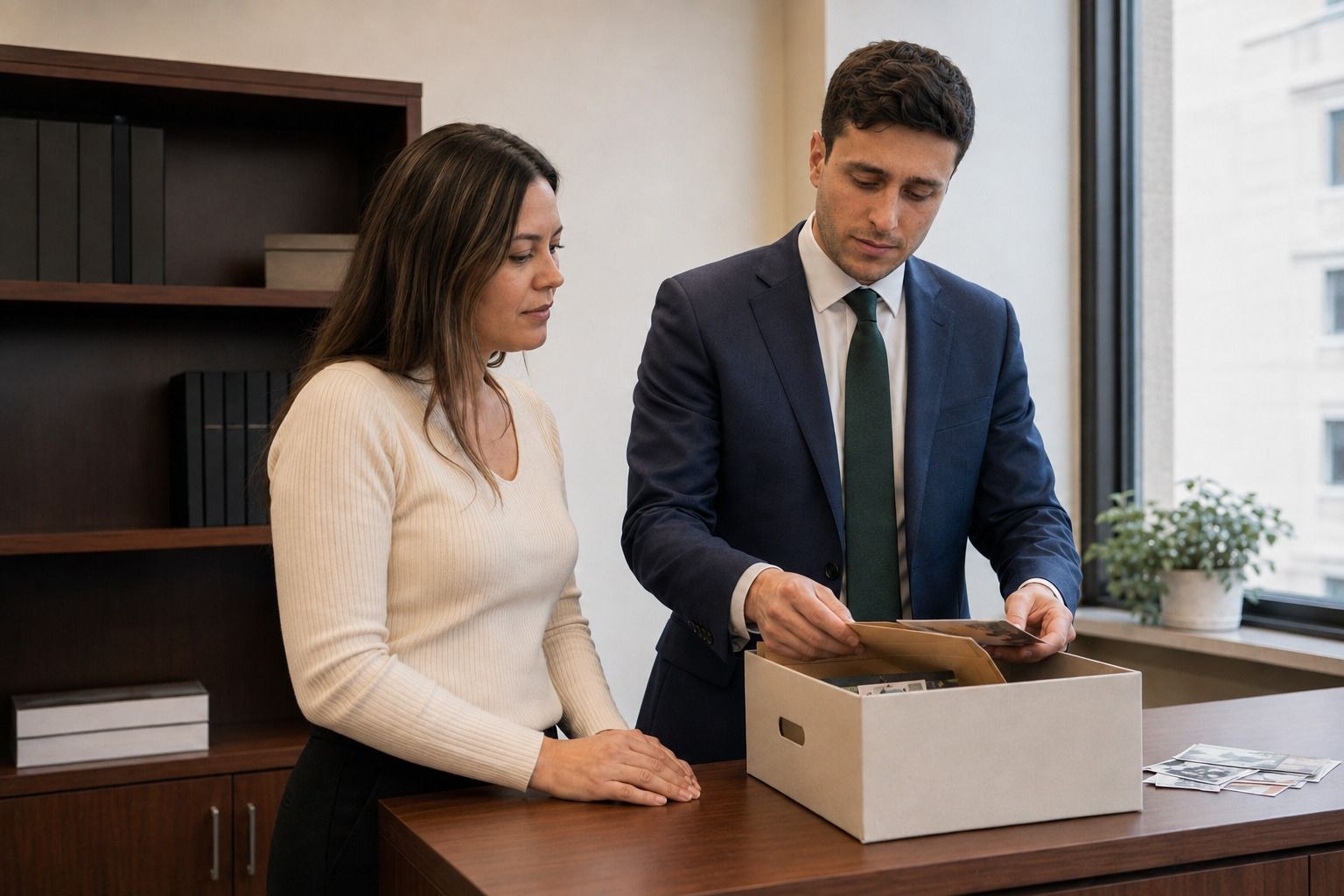
Because the claim is judged on what the officer knew, the evidence is the evidence of those minutes: body-worn camera footage, bystander video, surveillance cameras, the 911 and radio recordings, the arrest paperwork and the officer's own report, and your medical records from the same day. An NYPD officer who stops you must give you a business card that tells you where to request body-camera footage (Local Law 54 of 2018), and the NYPD directs civilians to request it by FOIL. The evidence page explains each request and why it goes in the first week.
Force against a person already in custody
The Fourth Amendment test governs the arrest and the stop. Once you are held before trial, in a precinct cell, a courthouse pen or a jail, the Fourteenth Amendment governs, and the test is still objective: a pretrial detainee's excessive force claim requires only that the force was objectively unreasonable, not that the officer intended to punish (Kingsley v. Hendrickson, 576 U.S. 389 (2015)). A convicted prisoner is protected by the Eighth Amendment instead, and for a known risk of serious harm the standard is deliberate indifference (Farmer v. Brennan, 511 U.S. 825 (1994)). The specific Eighth Amendment test for a use of force on a convicted prisoner is not published on this site because it is not in our verified ledger; the jail and prison abuse page goes through the two standards.
The defenses
The first defense is factual: that you resisted, reached, pulled away, or ignored commands, and the force was reasonable. It is argued on the officer's account and on the footage, and where they disagree, the footage usually wins. The second decides most cases before trial.
Qualified immunity
An officer is shielded from damages unless the conduct violated "clearly established statutory or constitutional rights of which a reasonable person would have known" (Harlow v. Fitzgerald, 457 U.S. 800 (1982)), and a court may decide that question first without deciding whether the force was unlawful at all (Pearson v. Callahan, 555 U.S. 223 (2009)). In a force case the argument is about precedent: whether a published decision with similar facts had already held this kind of force, in this kind of situation, unlawful.
The Supreme Court applied the doctrine to a Second Circuit force case this year. On March 23, 2026, in Zorn v. Linton, No. 25-297, 607 U.S. ___ (2026), the Court reversed the Second Circuit's denial of qualified immunity to a Vermont officer who used a rear wristlock on a passively resisting sit-in protester after warnings, holding that no precedent placed the question "beyond debate." The decision was per curiam, 6 to 3, with Justices Sotomayor, Kagan and Jackson dissenting. On April 20, 2026, the Court summarily vacated a Ninth Circuit decision denying immunity to Las Vegas officers in an in-custody death and remanded it in light of Zorn, three justices noting their dissent (Smith v. Scott, No. 24-1099 (2026)). The qualified immunity page goes through the doctrine and the 2026 decisions. The short version for a force case: the closer your facts are to a published case in which the force was held unlawful, the weaker the defense.
A plea or a conviction for resisting
Under Heck v. Humphrey, 512 U.S. 477 (1994), a Section 1983 damages claim that would necessarily imply the invalidity of a conviction cannot proceed while the conviction stands. A force claim does not always contradict a conviction, but a plea to resisting arrest or obstruction is the kind of plea the defense will argue does. Whether it does depends on what was pleaded to and what the force claim has to prove, and it is decided before the plea, not after. The criminal case and civil case page is about exactly that.
Where qualified immunity does not apply: the NYPD, under city law
Local Law 48 of 2021, passed March 25, 2021 and effective prospectively, created a local civil right of security against excessive force and against unreasonable search and seizure, enforceable against an NYPD employee or special patrolman and against the City as employer (N.Y.C. Admin. Code §§ 8-801, 8-802, 8-803). The statute says in terms that "it is not a defense to liability that a covered individual has qualified immunity or any other substantially equivalent immunity" (§ 8-804). Damages are compensatory, with punitive damages in the court's discretion, or at the plaintiff's election a statutory figure of $1,000, plus attorney's fees and costs (§ 8-805). The limitation period is three years (§ 8-806), exhaustion of administrative remedies is not required (§ 8-803), and the chapter is construed consistently with the Fourth and Fourteenth Amendments (§ 8-807). It covers NYPD employees and special patrolmen only, not the Department of Correction, the State Police or a department outside the City. Whether a notice of claim under General Municipal Law § 50-e is required for this claim is a question we have found no appellate decision on and do not publish an answer to; we serve the notice within 90 days anyway. The city law page explains what it does and does not change.
Who pays: the officer, the City, the State
The federal claim is against the officer personally. Punitive damages are available against the individual officer but never against the municipality (City of Newport v. Fact Concerts, 453 U.S. 247 (1981)), and a prevailing plaintiff may recover attorney's fees as part of costs (42 U.S.C. § 1988(b)). The City is reached under Section 1983 only where an official policy or custom caused the violation (Monell v. Dep't of Social Servs., 436 U.S. 658 (1978)); a failure to train counts only where it amounts to deliberate indifference (City of Canton v. Harris, 489 U.S. 378 (1989)), ordinarily shown by a pattern of similar violations (Connick v. Thompson, 563 U.S. 51 (2011)). The Monell page goes through the routes.
The state-law claim is the shorter route to the employer. Assault and battery under New York law are brought against the officer and the City together, but only if a notice of claim was served within 90 days after the claim arose (N.Y. Gen. Mun. Law § 50-e(1)(a)) and suit is filed within one year and 90 days (§ 50-i(1)); for a force claim the clock runs from the incident, and the City may demand a 50-h examination within 90 days of the notice (§ 50-h). No notice is needed for the federal claim (Felder v. Casey, 487 U.S. 131 (1988)). If the officers were State Police, the State cannot be sued under Section 1983 at all (Will v. Michigan Dep't of State Police, 491 U.S. 58 (1989)); the federal claim runs against the troopers personally and the state-law claim goes to the Court of Claims within 90 days (N.Y. Court of Claims Act § 10(3)). The state-law claims page and the notice of claim page go through each.
| Claim | Against | Notice | Suit | Authority |
|---|---|---|---|---|
| Section 1983, Fourth or Fourteenth Amendment | The officer; the City through Monell | None | 3 years from the incident | Owens v. Okure, 488 U.S. 235 (1989); CPLR 214(5); Felder v. Casey |
| Assault and battery, New York law | The officer and the City, county, town or village | 90 days from the incident | 1 year and 90 days | Gen. Mun. Law §§ 50-e(1)(a), 50-i(1) |
| City civil rights law (NYPD only) | The officer and the City | Not expressly required; we serve one | 3 years | N.Y.C. Admin. Code §§ 8-803, 8-806 |
| State-law claim against the State (State Police) | The State, in the Court of Claims | Claim or notice of intention, 90 days | Set by the Court of Claims Act | Court of Claims Act § 10(3), (3-b) |
The officer's history, the CCRB, and the open charge
Since the repeal of Civil Rights Law § 50-a, signed June 12, 2020, law enforcement disciplinary records in New York are subject to FOIL with personal information redacted, so an officer's prior force complaints can be requested; the disciplinary records page goes through it. A complaint to the Civilian Complaint Review Board is a separate process from a lawsuit, and the CCRB page explains its clock and when to file each.
If a criminal charge from the same incident is still open, talk to your defense lawyer before describing the arrest to anyone, including the CCRB, and do not name officers in writing. A force claim and a resisting arrest charge are two accounts of the same minutes, and the criminal case is handled first; the criminal case and civil case page explains how the two are sequenced. A force claim carries compensatory damages for the injury, nominal damages where a violation is proved and no loss is (Uzuegbunam v. Preczewski, 592 U.S. 279 (2021)), punitive damages against the officer, and fees. The damages page goes through each, and the what a case is worth page explains why this site refuses to put a number on it.
New Jersey and Florida
The federal test is the same in all three states. In New Jersey, the Attorney General's statewide Use of Force Policy (Directive 2020-13 of December 21, 2020, updated by Directive 2021-14 and most recently in September 2025) requires that force be a last resort, imposes a duty to intervene and to render aid, and bans chokeholds. Every use of force must be reported to the statewide Use of Force Portal within 24 hours, and the data are public. The federal claim and the New Jersey Civil Rights Act claim have two years (N.J.S.A. 2A:14-2; 10:6-2). The state tort claim needs a Tort Claims Act notice within 90 days of accrual, a six-month wait, and suit within two years (N.J.S.A. 59:8-8), with a late notice possible within one year on extraordinary circumstances (59:8-9); the notice does not apply to the Civil Rights Act claim (Owens v. Feigin, 194 N.J. 607 (2008)). Qualified immunity applies to the Civil Rights Act claim as it does under Section 1983 (Morillo v. Torres, 222 N.J. 104 (2015)).
In Florida the federal claim has four years (Fla. Stat. § 95.11(3); Doe v. Swearingen (11th Cir. 2022)). The state claim needs a written claim to the agency and, except for a city or county, to the Department of Financial Services within three years, with a six-month wait before suit (Fla. Stat. § 768.28(6)). Damages against the State and its subdivisions are capped at $200,000 per person and $300,000 per incident, with no punitive damages against the entity; those are statutory caps (§ 768.28(5)(a)). An officer has no personal liability under state law unless the officer acted in bad faith, with malicious purpose, or with wanton and willful disregard of human rights or safety (§ 768.28(9)(a)). The New Jersey and Florida pages go through each.
The officers who watched
When one officer used the force and the others stood by. What the claim requires and what the City's 2021 law adds.
Failure to intervene →Qualified immunity, in plain English
"Clearly established," the 2026 decisions, the pending bills, and what actually defeats the defense.
Qualified immunity →The footage
Body-worn cameras, bystander video, 911 and radio, medical records, and the requests that go out in the first week.
Evidence and body cameras →Common questions
I was resisting. Do I still have a claim?
Possibly. Resistance is one of the Graham factors, not the end of the question. The test is whether the force was reasonable in light of everything the officer knew, including the severity of the offense, whether you posed an immediate threat, and whether you were actively resisting or fleeing. Force that continued after the resistance stopped, or force out of proportion to it, can still be unreasonable. What the footage shows in the seconds before and after matters more than the word on the arrest report.
The officer says he was in fear for his life. Does that end it?
No. The test is objective. It asks what a reasonable officer would have done with the facts this officer had, and since Barnes v. Felix in 2025 it looks at the whole encounter, not only the moment the officer says he felt threatened. The officer's own conduct leading up to that moment is part of the record.
What is qualified immunity, and why does everyone mention it?
It is the defense that decides most force cases before trial. An officer is not liable for damages unless the conduct violated a right that was clearly established at the time, which in practice means a published case with similar facts. In March 2026 the Supreme Court, in Zorn v. Linton, reversed a Second Circuit decision that had denied immunity to an officer who used a wristlock on a passively resisting protester. The defense is strong where the facts are unusual and weak where they match a case already decided. It is not a defense under New York City's own civil rights law for NYPD officers.
How long do I have?
In New York the federal claim has three years from the incident. A state-law claim against the City of New York or another municipality needs a notice of claim within 90 days of the incident and suit within one year and 90 days. A claim under the City's 2021 law against an NYPD officer has three years. New Jersey and Florida have their own clocks, set out at the end of this page and in the deadline tool.
Tell us what happened.
One conversation with an attorney, in your language. We tell you which claims the facts support, which deadline runs first for the agency involved, what evidence to preserve this week, and whether a pending criminal case changes the timing. If it is not a case we can take, we say so and tell you where to go.
(718) 484-7510If a criminal charge is still open, talk to your defense lawyer before you describe the arrest to anyone, including us. English, Russian and Spanish in-house; an interpreter for any other language. Contingency fee, confirmed in writing before we begin.